
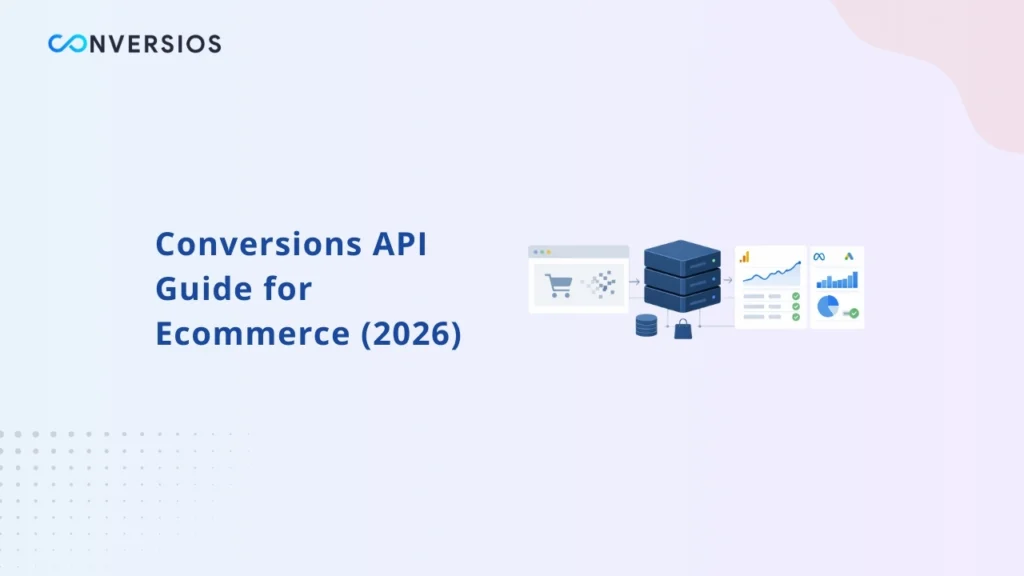
Accurate conversion tracking is becoming harder every year for e-commerce businesses.
Browsers block cookies, users decline tracking, ad blockers stop pixels from firing, and privacy rules continue to tighten worldwide. The result is simple but frustrating. Sales happen, but advertising platforms do not always see them.
This is why most major advertising platforms now encourage the use of Conversions API, often called CAPI. It is a server side method that sends confirmed conversion data directly from your backend systems instead of relying only on the browser.
In this guide, you will learn what Conversions API is, why traditional tracking struggles, how server side tracking works, and why CAPI is becoming essential for reliable e-commerce measurement in 2026 and beyond.
Why Ad Conversion Tracking Is Failing for E-commerce Stores
Most e-commerce tracking still depends on browser based pixels. These pixels rely on cookies, scripts, and page loads, all of which are becoming less reliable.
Here are the main reasons conversion tracking breaks:
- Browsers restrict third party cookies
- Users deny tracking consent
- Ad blockers block tracking scripts
- iOS tracking limits identifiers and attribution windows
- Page load interruptions stop events from firing
Even when a purchase is successful, the conversion may never reach the ad platform. Over time, this creates large gaps between store revenue and reported conversions inside ad dashboards.
What Is Conversions API (CAPI)
Conversions API is a server side method of sending conversion events directly from your website or backend systems to advertising platforms.
Instead of relying on a user’s browser, the conversion is recorded where it actually happens. That is inside your backend or order system. The event is then securely sent to the advertising platform using its official API.
Because the data comes from first party systems, it is far less affected by cookie restrictions, ad blockers, or browser privacy controls.
**Hashed identifiers** (using SHA256 for emails, phones) ensure GDPR/iOS compliance across platforms like Meta and Google enable it here
This leads to more consistent and dependable conversion reporting.
Why Ad Platforms and Analytics Show Different Conversion Numbers Than Your Store
Your store records completed transactions with very high accuracy. Advertising platforms do not work the same way.
Ad platforms depend on tracking signals being delivered successfully after the event occurs. When browser based tracking is blocked, delayed, or partially lost, conversions never reach the platform.
In addition to tracking loss, differences also happen because:
- Attribution models vary by platform
- Reporting windows are different
- Some platforms use modeled data
This is why GA4, ad platforms, and backend systems rarely match exactly. Conversions API helps reduce these gaps by delivering verified events more reliably.
How Conversions API Works
With Conversions API, conversion events are sent from the server instead of the browser.
When a key action occurs, such as a purchase or form submission:
- The backend records the event
- A structured event payload is created
- Customer identifiers are securely hashed
- The event is sent directly to the platform’s Conversions API endpoint
Because the event comes from the server, it does not depend on the user’s device, browser settings, or page load behavior.
Server-side event flow complete guide bypasses browser limits. Because the event comes from the server, it does not depend on the user’s device, browser settings, or page load behavior
Which Advertising Platforms Support Conversions API
Most major advertising platforms support server side conversion tracking or a similar system.
These include:
- Meta Ads
- Google Ads enhanced conversions
- TikTok Ads
- Snapchat Ads
- Pinterest Ads
- Microsoft Ads
Each platform has its own implementation rules, but the goal is the same. They want to receive verified conversion events directly from first party systems.
Benefits of Using Conversions API for E-commerce Businesses
Conversions API helps reduce data loss caused by browser restrictions and tracking limitations.
Key server side benefits include:
- More consistent conversion reporting
- Better alignment with backend sales data
- Stronger attribution signals for optimization
- Improved audience matching
- Greater control over shared data
The biggest advantage is confidence. Marketers can trust the numbers they see instead of constantly questioning missing conversions.
How Pixels and Conversions API Work Together
Pixels and Conversions API serve different purposes in a modern tracking setup.
Pixels capture user interactions inside the browser. They help record page views, clicks, and on page behavior.
Conversions API sends confirmed events from backend systems, where transactions are recorded reliably.
When both are used together:
- Pixels provide real time signals
- Server side events provide accuracy
- Deduplication prevents double counting
This combined setup is now considered best practice by most advertising platforms.
Why Server-Side Tracking Will Matter More in 2026 and Beyond
Advertising platforms are increasingly prioritizing data that comes directly from first party systems.
As cookie based attribution continues to weaken, server side events play a larger role in conversion modeling and campaign optimization.
Businesses that rely only on browser based tracking will see growing reporting gaps. Those using server side tracking gain more stable measurement and long term confidence in performance data.
Conversions API Checklist for Marketers
Use this checklist to validate your setup:
- Conversion events are sent from backend systems
- Event value and currency are included
- Customer identifiers are securely hashed
- Events are sent shortly after the action
- Conversion data broadly matches internal records
If any of these items are missing, tracking accuracy is likely affected.
Common Conversions API Issues and Practical Fixes
Most Conversions API issues come from incomplete setup rather than platform errors. Common problems include:
- Missing conversions due to inconsistent server delivery
- Inflated counts caused by missing deduplication
- Low match quality from missing identifiers
- Reporting differences due to attribution windows
Regular validation helps catch these issues early and keeps reporting reliable.
What Results E-commerce Stores Typically See
After implementing Conversions API, many stores report:
- Fewer sudden drops in reported conversions
- Better alignment with backend transaction data
- More stable campaign optimization
- Increased confidence in performance reporting
These improvements come from better data quality, not changes to bidding or creatives.
How to Get Started With Conversions API
If conversion data feels inconsistent across advertising platforms, the first step is reviewing how events are delivered.
Relying only on browser based tracking is no longer enough in a privacy focused environment.
Getting started with Conversions API means identifying key business events, ensuring they can be sent from backend systems, validating delivery, and monitoring alignment with internal records.
Building this foundation helps ensure reliable measurement and stronger campaign performance in the long term.
Frequently Asked Questions
Q. Is Conversions API required for accurate ad tracking in 2026?
It is not mandatory, but it is increasingly important as browser based tracking becomes less reliable. Most platforms now expect server side signals for stable attribution.
Q. Does Conversions API replace pixels?
No. Pixels capture browser interactions, while Conversions API sends confirmed backend events. Using both together provides the most complete measurement.
Q. Is Conversions API compliant with privacy regulations?
Yes, when data is properly hashed, consent rules are followed, and only required parameters are sent.
Q. Will server side tracking slow down my website?
No. Events are sent from the server, which reduces reliance on browser scripts and can improve page performance.
Q. Can Conversions API track more than purchases?
Yes. It can be used for leads, sign ups, form submissions, and other important business actions.